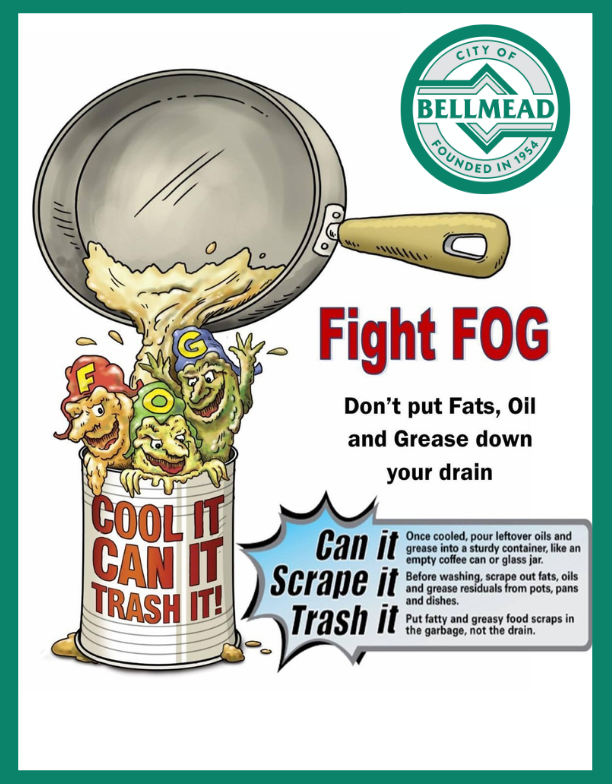
This is a reminder that fats, oils, and grease (FOG) items should never be put down the sink. FOG are natural by-products of the cooking and food prep process. Common sources include food scraps, meat fats, cooking oils, lard, baked goods, salad dressings, sauces, marinades, dairy products, shortening, butter, and margarine.
In a warm, liquid state, FOG can appear harmless since it flows easily down the drain. However, shortly after it enters the drain, it can quickly cool and turn into a solid that will cause problems in the pipes in your home and in the sanitary sewer system. As the FOG builds up, it restricts the flow in the pipe and can cause untreated wastewater to back up into homes and businesses, resulting in high costs for cleanup and restoration.
Overtime, FOG will accumulate along the walls of the sewer pipes. This will restrict the flow of wastewater and can cause sewer backups not only into your property, but throughout your neighborhood. Manholes can overflow into parks, yards, streets, and storm drains, allowing FOG to contaminate local waters, including drinking water. Exposure to untreated wastewater is a public-health hazard.
FOG also contributes to operational issues for our wastewater utility such as obstructing flow in the sewers, causing foul odors, interfering with equipment and treatment processes, along with potentially polluting our lakes and streams. Communities spend billions of dollars every year unplugging or replacing grease-blocked pipes, repairing pump stations, and cleaning up costly and illegal wastewater spills. Excessive FOG in the sewer system can affect local wastewater rates.
Please do yourself and the Public Works Departments a favor today by NOT flushing fats, oils and grease down the sink. The presence of FOG in the sewer system affects everyone in our community!